What Krav Maga and Powerlifting teaches us about building mental resilience

“So that one may walk in peace” - Krav Maga Slogan
Everyone has their own rock bottom.
It’s a dark, heavy place to land. This time last year, I found myself right there. I had emotionally flatlined—both personally and professionally—due to circumstances completely out of my control. At some point, life just punches you in the face. Whether you see it coming or get hit with a sucker punch, we all face moments that leave us wondering if we’ll ever see the light again.
That’s exactly how I felt—stuck in the trenches, depressed, with no way to climb out of the dark hole. Every day felt like pushing through resistance, making even the smallest tasks feel heavy and exhausting. No one asks to fall into this ravine, but it happens to many of us. And as hard as it is to believe, I think everyone needs to face their own crucible at some point. Looking up from the bottom gave me the chance to learn lessons I couldn’t have seen otherwise—and I know I’m not alone in that.
So how did I trudge through the muddy waters and climb back—stronger and more resilient than before? Two things: I built a mindset rooted in never being a victim, not even to myself, and I committed to identifying my weaknesses in real-time and pushing through them. I couldn’t do this alone. I needed help—for both my body and mind—which came through doubling down on my Krav Maga practice and joining a powerlifting community. (I also began meditating, but I’ll dive into that in a future post.)
Krav-ma-what? If you’ve watched Batman, popular Netflix series, Jessica Jones, or the 2002 Jennifer Lopez thriller, Enough, you’ve seen a peek into the world of Krav Maga. And powerlifting?
But you’re like 5’7” and in your 40s, Jason. Patience grasshopper... I will explain.
What is Krav Maga?
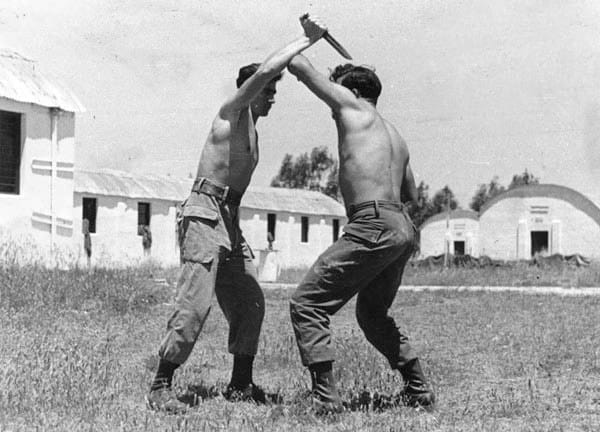
The best, simplest explanation of Krav Maga comes from Tacticta, a school in Santa Clara: “Krav Maga (‘krahv mahGAH’) is a modern, dynamic self-defense system designed to be practical for people of any age, shape, or size. The techniques build on your natural instincts to help you defend against attacks in any scenario. Krav Maga (‘contact combat’ in Hebrew) was developed in the 1950s for the Israeli Army, combining the most effective techniques from martial arts and fight training. Today, it’s used for self-defense, law enforcement, and military training.”
Though relatively young compared to other martial arts and systems, Krav Maga is now taught worldwide, from public organizations to private training. Some consider it the original mixed martial art, as it pulls techniques from judo, jiu-jitsu, wrestling, and boxing. Its no-holds-barred approach starts with de-escalation but quickly moves to using your body’s natural reactions to defend and counterattack at the same time, targeting vulnerable areas. Most importantly, Krav techniques work regardless of your gender, size, or build.
So, what’s the point? Krav Maga is designed to make sure you’re never a victim. Everything you learn is practical and usable from day one. It’s about taking a bad situation and coming out on top—whether you’re a law enforcement officer or just a small teenager walking home from the train station. This mindset became crucial for me as I pulled myself out of that hole. When life hands you lemons, you fight back and make lemonade.
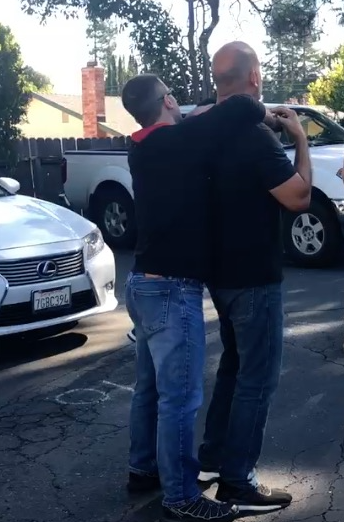
Attack the Attacker, even if the Attacker is yourself
A core principle in Krav Maga is that the moment you're attacked, you become the attacker—you are never the victim. When the inevitable happens, your job is to protect yourself by responding more aggressively than your attacker. If you're in a vulnerable position, you change it. Krav teaches you to stay calm and be comfortable in uncomfortable situations. You learn to face scary, vulnerable moments, break them down, and conquer them with simple shifts—both in mind and body.
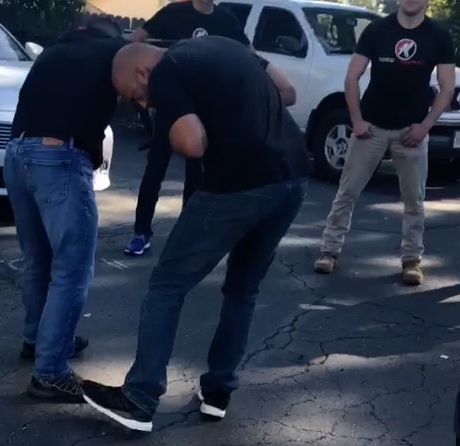
In the business world, you’ll face ambushes, embarrassment, or even abuse at some point. It might be something small, like a negative review on your Facebook page or a piece of code that just won’t work after hours of effort. It could be personal, like a scathing 360 performance review, or something major, like losing several big accounts all at once. The list of things that can throw us off is nearly endless.
Instead of retreating into victimhood, you need to protect yourself, your company, your customers, and your team. It all comes down to attitude, preparation, and the practice of building the skills to attack the attacker—especially when that attacker is the voice in your head telling you you’re not good enough.
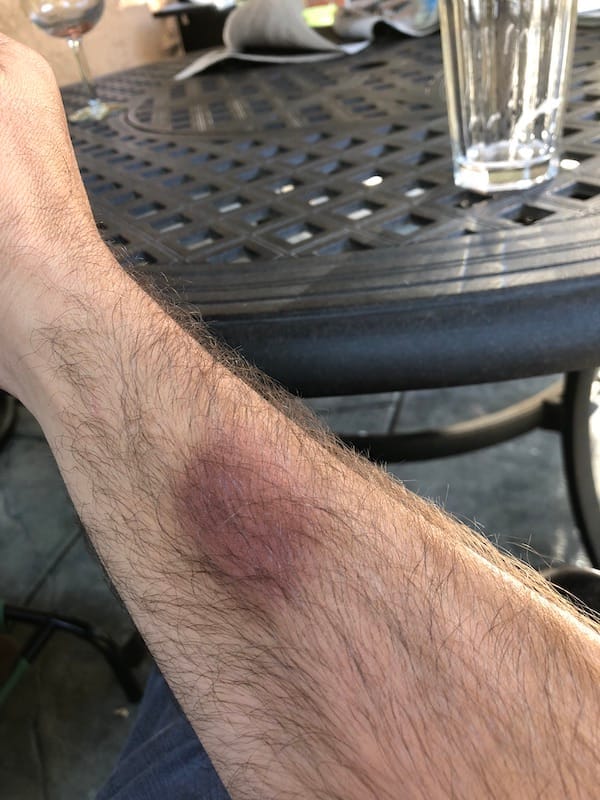
Bruises go away; learning is forever
Listen, you're going to take hits, and you need to be ready for how that feels. In my Krav Maga training at DogoKravMaga, Gustavo Desperatti, the head instructor, regularly puts us into sparring duos or trios to experience what it's like to be hit, trapped, or thrown down. Imagine being grabbed from behind, a knife to your neck, demanding your keys. Even after practicing the defense, the shock of the situation can erase all that training in an instant. For many, the response is, "Here, take the car." But for those who choose the other direction (and it is a choice), Krav's sparring sessions are designed to reduce that shock through experience. It’s about anticipation and preparation. You can’t expect to win a fight if you’ve never felt a punch to the gut. The pain is temporary, but it removes the fear of what life might throw at you. In the process, you become stronger and more resilient.
The same goes for planning and development in business. As an executive and leadership coach, my goal is to prepare my clients with that same level of readiness. An unexpected hit won’t be debilitating if you constantly analyze weak points and make plans for future attacks. I teach my clients how to avoid and deflect those punches, while also preparing for any bumps along the way. Remember, those small “punches” aren’t massive failures—they're just lessons disguised as setbacks, and they can spark powerful growth.
Being prepared and refusing to be a victim is one thing, but growing beyond where you are? That’s something else entirely. And that’s where powerlifting comes in.
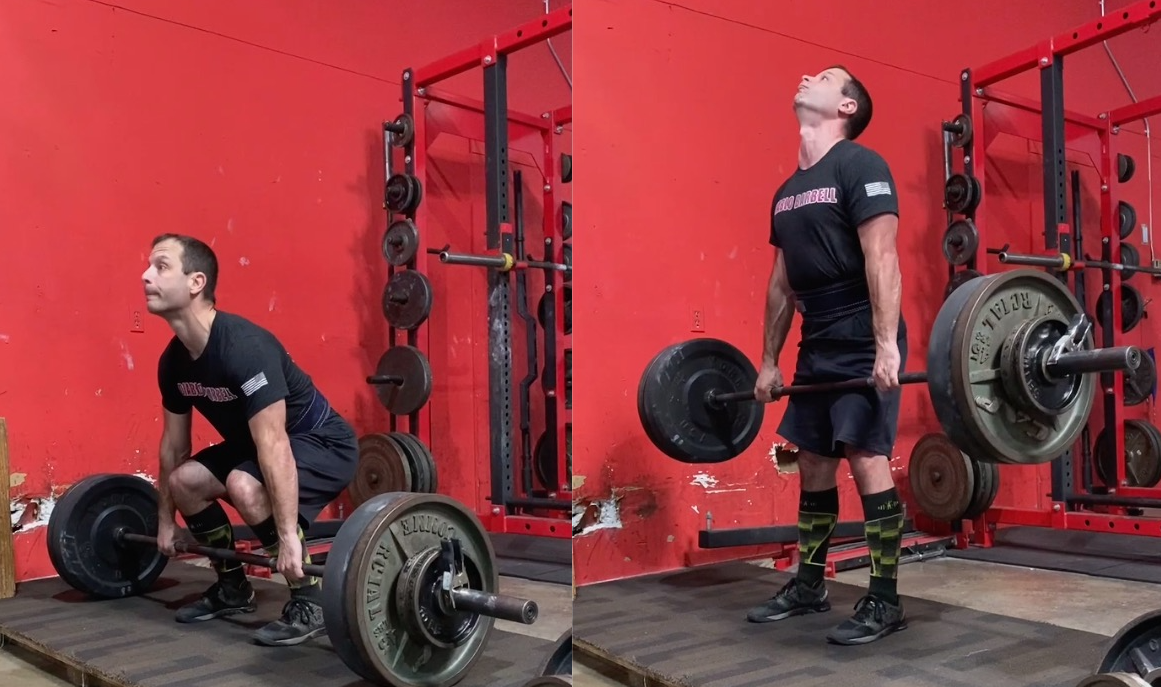
What is Powerlifting?
Powerlifting is a competitive sport where athletes attempt three main lifts—Squat, Deadlift, and Bench Press—to achieve a combined total weight. One of the best training systems for this is the Conjugate Method, developed by Louie Simmons at Westside Barbell. It focuses on physical preparedness, tailoring programs to the individual through varied movements and accessory exercises, maximizing strength and efficiency toward specific goals.
More importantly, as Burley Hawk of Westside Barbell puts it, “By constantly identifying and attacking weakness, you are ensuring you produce the strongest lifter possible, using the most efficient means. Your success is 100% dependent on your ability to identify your weakness and make the proper exercise selections.”
This was the second key mindset shift that fueled my transformation. Using these powerlifts in a balanced strength training program with the Conjugate method became, and still is, a way to attack weaknesses—both physical and mental—on a regular, consistent basis.
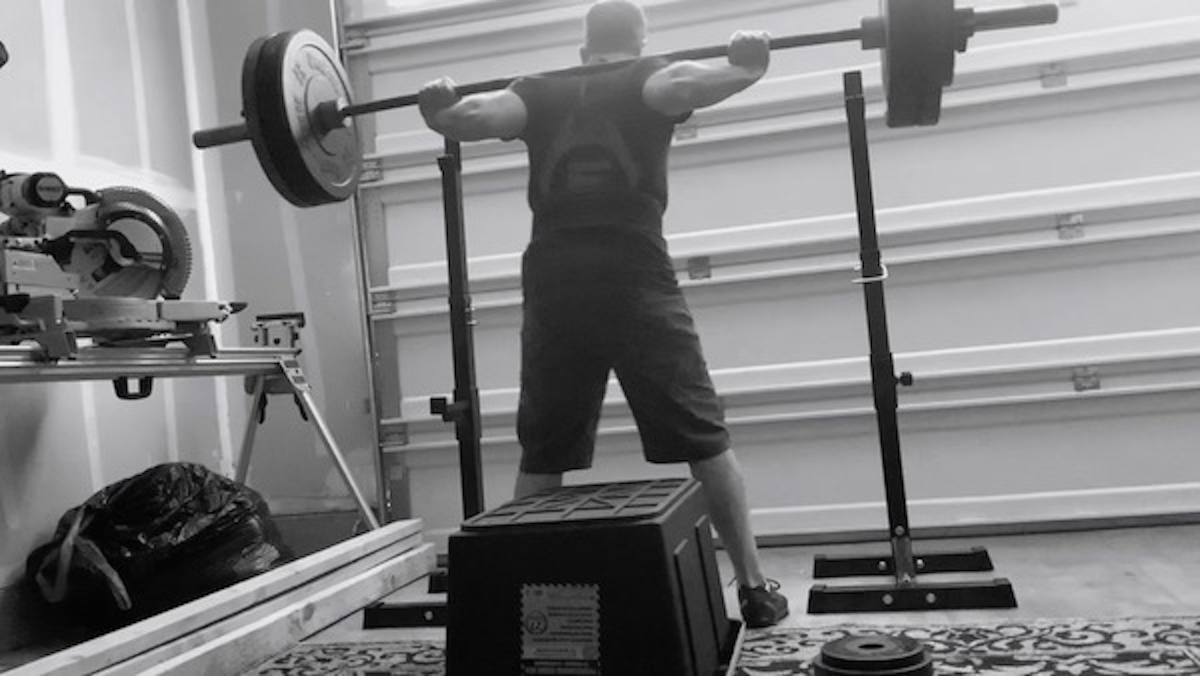
Continuing my workouts during the recent shelter-in-place with my coaches via Zoom.
Ted O’Neil, the owner of Diablo Barbell, believes that there’s a solution for every problem. He teaches his "Diablos" that every rep and every set is a chance to break through barriers and limiting beliefs. And in case you’re wondering, the gym is mirror-free. Early on, I realized Diablo isn’t just a gym—it’s a community of people striving to become the best versions of themselves, physically, spiritually, and emotionally. As a Diablo, I don’t see it as just a place to lift heavy things; it’s truly a transformation center.
When I asked Ted about this, he shared a parable (paraphrased):
Let’s say you’re struggling with a turbulent relationship with your in-laws, but you only see them a few times a year. That gives you just a handful of chances to break through the barriers in that relationship. At the very least, you can improve your mindset to better handle the friction. At Diablo, we train to break through barriers with every rep and every set. It’s about breaking limiting beliefs that hold us back, in every single workout.
Ted continues with his sage wisdom in an interview with a successful podcaster and member of Diablo Barbell, Jon Leon Guerrero: “We kind of stay stuck in ourselves, in our dogma, and in our story. And then we try to use willpower to grind through something or to exert some kind of a change, hoping that ultimately, something external is going to bump into us and our lives are going to be different, right?” Oh Ted - how did you know?
Ted shared more of his wisdom in an interview with Jon (paraphrased):
“We kind of stay stuck in ourselves, in our dogma, and in our story. Then we try to use willpower to grind through, hoping that something external will bump into us and magically change our lives, right?”
Change your story You won’t make progress without shifting your mindset and stepping outside your comfort zone. Let go of old habits if you want to see real growth. As the saying goes, insanity is doing the same thing over and over while expecting different results. If what you were doing worked, you wouldn’t be stuck.
Bringing it together
Krav Maga and powerlifting together helped me climb out of the ravine, teaching me invaluable lessons about myself. They also led me to become a formally trained executive coach, allowing me to share what I’ve learned about building and growing people and teams.
When you're stuck at the bottom of a ravine—or just feel static, unable to break through the wall in front of you—it’s often because you're making excuses based on your brain’s chemical response. You can’t breathe. Your shoulders hurt. You can’t boost sales, find the right partner, or stop eating that daily donut. Your brain is working against you, acting like a catalog of past experiences. The unknown feels impossible because your mind has no record of success in that area, filling you with uncertainty.
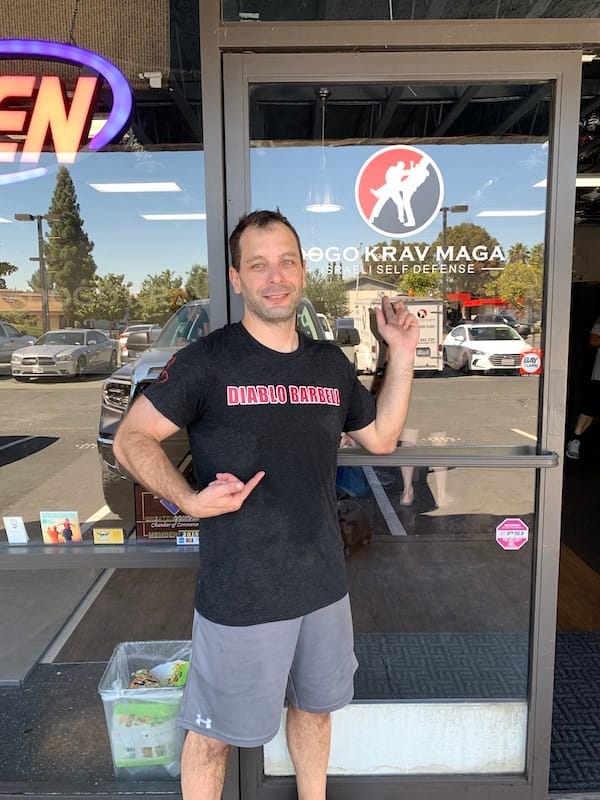
Practicing Krav Maga and powerlifting isn’t just about physical change—it’s a mental transformation too. As Ted puts it (paraphrased), “...as a methodology, as opposed to something that you did, you now really hold the keys to the rest of your life. If you can transform from point A to B in one area, you start to realize that every problem has a solution."
Once you prove that challenging yourself, stepping into the unknown, and putting in hard work leads to transformation, you can replicate the process across every area of your life. Over time, you’ll get closer to your goals while building a lasting resilience to life’s twists and turns.
A big part of success is being honest with yourself. Don’t confuse your reality with someone else’s. What you thought you couldn’t do—or refused to accept—you’ll find you can. Look inward and build your capabilities from there.
At this point, I’m thankful for the people and circumstances that knocked me down so hard I had no choice but to get back up. The lessons I’ve learned, the growth I’ve experienced, and the path I’ve found wouldn’t have happened otherwise. I’m deeply grateful to be part of the communities at Diablo and Dogo.